

Call Today For A Free Consultation
Call Today For A Free Consultation
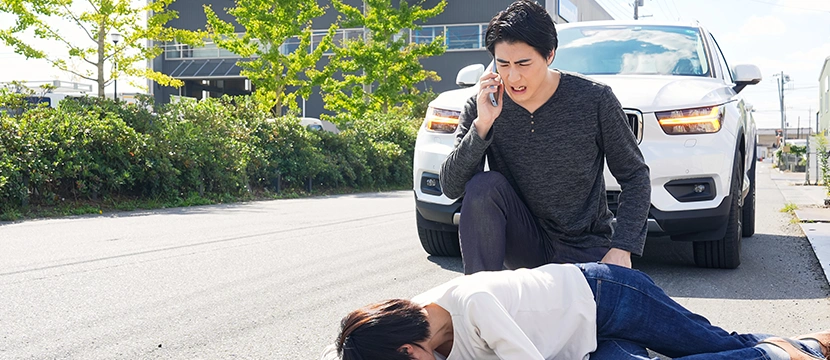
Pedestrian accidents can be devastating, resulting in severe injuries or even fatalities. Knowing what to do immediately after such an incident and understanding your legal rights under Illinois law are crucial steps in protecting your health and securing fair compensation.
At D&W Law Group, our Chicago pedestrian accident lawyers are committed to defending the needs of accident victims throughout the Chicago area. Our attorneys have recovered millions of dollars on behalf of injured clients, and we provide guidance through every stage of a pedestrian accident claim — starting the moment you call us, not just once a case is filed.
Call the 8’s (312-258-1800) for a free consultation. Tell us what happened, and we can help you determine what happens next.
Pedestrian injury claims are shaped as much by the attorney handling them as by the law itself. The D&W Law Group attorneys who take on these cases bring a combined 75 years of Illinois legal experience.
Settlements and verdicts secured for clients have ranged as high as $14.9 million, and client reviews on independent, third-party platforms average 4.9 stars. That combination of courtroom tenure and case history often shapes how insurance adjusters approach settlement negotiations.
Past results do not guarantee future outcomes.
Pedestrian deaths are not a rare occurrence on Chicago streets. They are a persistent, worsening safety problem, and the data backs that up.
| Scope | Statistics and Details | Source |
|---|---|---|
| Statewide (Illinois) | 219 pedestrian fatalities in 2024, a 9.5% increase over the 200 pedestrian deaths reported in 2023. | IDOT, 2024 |
| Chicago Metro Region | 144 pedestrian fatalities in 2024, up 6.7% from 135 the year before. Includes Cook, DuPage, Kane, Lake, McHenry, and Will counties. | IDOT regional data, 2024 |
| Chicago Surface Streets | 38 pedestrian deaths in 2024 alone. | CDOT monthly crash summaries |
| Citywide (Total Traffic) | 109 total traffic deaths in 2024: 38 pedestrians, 2 cyclists, and 69 vehicle occupants. | Chicago Sun-Times, 2025 |
| Community Equity | High hardship community areas account for nearly half of all pedestrian fatalities. Nearly half of those killed died within a mile of home. | City of Chicago, Complete Streets, 2024 |
These numbers matter for a very practical reason: they tell insurance companies, judges, and juries that pedestrian danger in Chicago is well-documented and foreseeable. That fact can matter when a case turns on whether a driver, a city agency, or a property owner should have known a stretch of road was dangerous.
Many pedestrian injury cases turn on one question: who had the right-of-way at the moment of the crash? Illinois law answers this directly for crosswalks.
Under 625 ILCS 5/11-1002(a), a driver must stop and yield to a pedestrian crossing within a crosswalk when signals are absent or not working. This applies if the pedestrian is on the driver’s half of the road, or close enough on the opposite half to be in danger.
In plain terms: if you’re lawfully in a crosswalk and no signal is controlling the intersection, oncoming traffic is legally required to stop for you.
The same statute also places limits on pedestrians:
Liability in these cases often comes down to small details: exactly where the pedestrian was standing, whether a signal was working, how close the vehicle was. Mapping those facts onto the specific statutory language, rather than general negligence principles, is often what separates a denied claim from a paid one.
A pedestrian accident attorney in Chicago can review the facts and determine whether right-of-way laws were violated and what that means for your claim.
Some pedestrian accidents are caused less by a driver and more by a dangerous road or sidewalk condition, like a broken crosswalk signal, poor lighting, or a defect the city knew about and failed to fix. Claims like these work differently from an ordinary case against a driver.
Under the Illinois Local Governmental and Governmental Employees Tort Immunity Act, most claims against a local public entity, such as the City of Chicago, CTA, or Cook County, must be filed within one year of the injury rather than the standard two years allowed for a typical personal injury claim.
The Act also limits liability for ordinary negligence in many situations, though the exact rule depends on the type of claim. For many claims against a government entity (like negligent supervision or discretionary decisions), the entity’s conduct has to rise to “willful and wanton,” meaning actual intent to harm or an utter disregard for public safety, not just carelessness. Other claims, like a known sidewalk defect the city failed to fix, can turn instead on whether the entity had notice of the danger.
Either way, these claims involve a higher bar and a shorter deadline than a standard car-versus-pedestrian case, which is why they call for a closer legal review early on, before the one-year window closes.
The steps you take immediately after a pedestrian accident can significantly affect both your health and your ability to bring a successful claim.
If you are able to move, get to a safe location away from oncoming traffic. If you cannot move safely on your own, call out to bystanders for help rather than attempting to cross additional lanes of traffic.
Get evaluated even if your injuries seem minor. Some of the most serious pedestrian injuries — including traumatic brain injuries and internal bleeding — are not obvious right away. Medical records created at this stage also become critical evidence if you later file a claim.
Call the police so an official report is created. That report documents the driver’s information, witness statements, and the physical circumstances of the crash — details that are often impossible to reconstruct later and that insurers rely on heavily.
Where it’s safe to do so, collect the driver’s contact information, license plate, and insurance details; get names and phone numbers for any witnesses; and photograph the scene, the vehicle, your visible injuries, and any related property damage.
Once these immediate steps are handled, our attorneys can guide you through everything that follows, from dealing with insurance adjusters to building the evidentiary record your claim will need.
Every claim is different, but compensation in a pedestrian injury case typically falls into a few core categories:
These damages are designed to restore the victim as much as possible to their pre-accident state, addressing both immediate needs and long-term consequences.
A well-documented claim accounts for both the economic and non-economic impact of the injury. Economic damages, such as specific medical bills and documented lost income, provide a clear baseline for value. Non-economic damages, like pain and suffering or the loss of enjoyment of life, are more subjective but often represent a significant portion of a successful recovery.
A pedestrian injury lawyer can review the specifics of what happened and help determine what your claim may realistically be worth.

Yes, in many cases. Illinois follows a modified comparative negligence rule, meaning you can still recover compensation even if you were partly at fault for the accident, but your recovery is reduced by your percentage of fault. You are barred from recovering anything if you are found 51% or more responsible.
Stay as calm as possible and gather whatever identifying details you can, including the vehicle’s make, model, and color, a partial or full license plate number, and any distinguishing features of the driver or car. Report the hit-and-run to police as soon as possible; the sooner it’s reported, the better the odds of identifying the driver.
In Illinois, the statute of limitations for most personal injury claims, including pedestrian accidents, is generally two years from the date of the accident under 735 ILCS 5/13-202. That window can be shorter in claims against a government entity and can work differently for claims involving a minor, so it’s important not to assume the standard two-year period automatically applies to your situation.
An experienced personal injury attorney can navigate the legal process on your behalf. They can also gather evidence, consult with accident-reconstruction or medical experts where needed, and negotiate directly with insurance companies. While you focus on recovering, our pedestrian injury lawyers in Chicago take on the weight of the claim itself.
If the at-fault driver is uninsured or underinsured, you may still be able to recover compensation through your own policy’s uninsured/underinsured motorist coverage. We can review your policy with you and explain exactly what options are available.
Navigating the aftermath of a pedestrian accident is an immense challenge, but you do not have to handle it alone. From understanding complex right-of-way statutes to managing the nuances of comparative negligence, the legal path forward requires experienced advocacy.
At D&W Law Group, our attorneys leverage over seven decades of combined experience to help Chicago families secure fair compensation for medical bills, lost wages, and pain and suffering. Whether you are facing a hit-and-run, an uninsured driver, or a dispute over fault, we are here to provide clarity and fight for your recovery.
Contact D&W Law Group at 312-258-1800 for a free, no-obligation consultation. Let us manage the legal complexities while you focus on your health and your family.

I was in a accident and D&W Law group took very grate care of me and I would recommend this law group to any one if you were in a car accident please call this law group there are great.
I come from the "Service" industry with a predominantly Hispanic customer base and I am very particular as too whom I refer my customers to when they need assistance. D&W has pulled thru every time taking care of my customers as I would. Thank you for all you do!
After what seemed like an impossible search, I was referred to D and W Law Group. I was met with a very knowledgeable staff who exceeded my expectations. All of my questions and concerns were answered in a timely manner.
I just have a question ik it's been a while since I had my accident. I just wanted to know if I'm still having complications do to my injury what do you suggest I do can you all give me a call or can I call to talk more details…
Pros 100% Font bother going anywhere else. They actually care about doing good and put the thier clients best interest 1st. I hope I never need help in this way again but if I did I wouldn’t go anywhere else.

Get trusted guidance from Chicago personal injury attorneys who know how to stand
up to insurance companies.
Fields marked with an * are required
"*" indicates required fields

Personal Representation From Experienced, Dedicated And Successful Chicago Personal Injury Lawyers
© 2026 D&W Law Group • All Rights Reserved.
Disclaimer | Site Map | Privacy Policy | Digital Marketing By: 
*Images are obtained under license from Canva and other third-party stock image providers, with attribution included where required.