

Call Today For A Free Consultation
Call Today For A Free Consultation
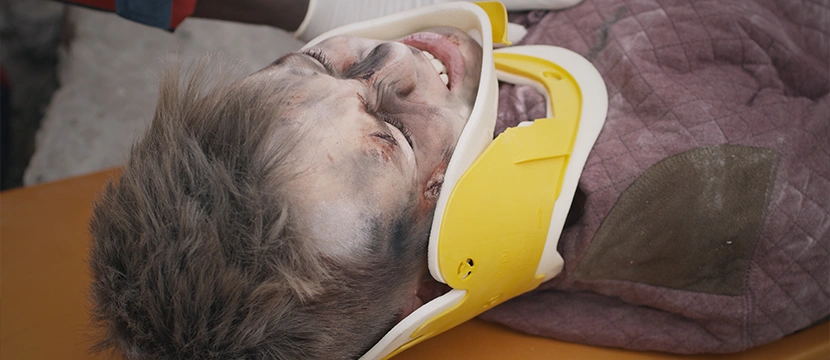
A catastrophic injury is measured in decades, not days. When a spinal cord injury, a traumatic brain injury, an amputation, or a severe burn takes away your ability to work or live without help, the real cost is not the first hospital bill. It is the surgeries still years away, the home that has to be modified, the attendant care, and the income that may never fully return.
If someone else’s carelessness caused that kind of harm to you or someone you love, you need attorneys who have handled cases this large before, not a general practice that takes a few every year.
D&W Law Group has represented catastrophically injured people across Chicago and Cook County for decades. Co-founder Lance C. Dale has concentrated on catastrophic personal injury and wrongful death since he began practicing in Illinois, and he builds every case around what your future actually costs, not what an insurance company offers first.
Numbers cannot undo a permanent injury, but they show what focused trial preparation can recover once the damage is lasting. Here is a sample of results our firm has obtained in cases involving job sites, mass transit, and medical negligence across the Chicago area.
| Outcome | Case Type |
|---|---|
| $14.9 million | Worksite accident |
| $6.5 million | School bus accident with back, carpal tunnel, and rib injuries |
| $5.5 million | Medical malpractice causing permanent infant brain injury |
| $3.6 million | CTA accident causing a fractured pelvis |
| $3 million | Construction accident causing a severe leg injury |
Prior results do not guarantee a similar outcome.
We represent people whose injuries are severe enough that a full return to normal life is not realistic, whether the harm came from a fall, a crash, a defective machine, or a hospital’s mistake. Four kinds of injury sit at the center of our catastrophic caseload, and each one carries a lifetime of cost:
We also handle multiple fractures that require surgical hardware and long rehabilitation, and wrongful death when a catastrophic injury proves fatal, a subject we cover in more depth on our wrongful death page.
These injuries usually trace back to one of a handful of causes. We build cases arising from:
A catastrophic injury is not about today’s hospital bill. It is about surgeries scheduled years from now, home modifications, attendant care, and income that may never fully return. What happens if you accept a quick settlement before you know whether you will need lifelong care?
What happens if the insurance company’s doctor says you have recovered while your own doctor says you have not?
Insurance adjusters handle catastrophic claims differently than routine ones. The larger the potential payout, the harder they tend to work to shrink it, often by disputing the cause of the injury, the need for future treatment, or how much income you have actually lost. For a younger person facing decades of lost earning capacity, that one dispute can be worth millions on its own.
Illinois law also gives you a limited window to bring a claim, and that window can close far sooner when a government body such as the CTA or the City of Chicago is involved. Waiting to talk with a lawyer only gives the other side more time to build its defense.
Contact us for a free consultation about your catastrophic injury.
Catastrophic injury cases are won or lost on the strength of the damages proof, not just the liability argument. That is the part of the case our founding partner concentrates on.
Attorney Lance C. Dale has focused on catastrophic personal injury and wrongful death since he began practicing in Illinois, and he has seen how insurers try to shrink a claim before a family even understands the diagnosis. He leads these cases with a single priority: document what the injury will actually cost over a lifetime before anyone talks settlement.
He works alongside attorney Mark Curran III, who pairs a background in finance with his law degree and applies that lens to model future medical costs, lost earning capacity, and the true long-term price of a permanent injury rather than accepting an insurer’s discounted estimate.
Attorney Scott B. Wolfman, who has practiced in Illinois since 1993, brings the same scrutiny to construction and medical malpractice cases where a single safety failure changed a client’s life permanently.
Together they work with treating physicians, life-care planners, and economists to build a record of what a catastrophic injury will cost over a lifetime, then prepare that record for a Cook County jury rather than a settlement table.
Most catastrophic injury lawsuits filed in Chicago proceed through the Richard J. Daley Center, 50 West Washington St., Room 801, Chicago, IL 60602, home to the Law Division of the Circuit Court of Cook County.
The Law Division hears actions in which the amount of the claim is in excess of $30,000, which covers the overwhelming majority of catastrophic injury cases given the scope of lifetime medical costs and lost income involved.
Cook County juries hear more catastrophic injury cases than any other venue in Illinois, and insurers know it, which is part of why a claim documented well enough for a Daley Center courtroom carries real weight in settlement talks.
Filing in the right division, against the right defendant, and within the right deadline all matter before your case is ever heard by a judge. We handle those filing requirements so a paperwork mistake never becomes the reason a catastrophic injury claim gets dismissed before the facts are even reviewed.
Two rules affect nearly every catastrophic injury claim filed in Illinois.
The filing deadline. Under Illinois’s personal injury statute, actions for damages for an injury to the person shall be commenced within 2 years next after the cause of action accrued, which is generally read as two years from the date of the injury.
Claims against a government body such as the CTA or the City of Chicago typically carry a far shorter one-year deadline, so those cases need attention right away.
The fault rule. Under modified comparative negligence, an injured party may recover damages as long as he or she is not more than 50% at fault for the injury, and the recovered amount may be reduced in proportion to the degree that the injured party was at fault, a standard the Illinois Department of Insurance explains applies statewide.
Being partly at fault does not automatically end your claim, but it can reduce what you collect.
A catastrophic injury generally causes permanent disability or long-term impairment rather than a full recovery. That includes traumatic brain injuries, spinal cord damage, severe burns, amputations, and multiple fractures requiring lifelong care or ongoing rehabilitation.
As explained above, Illinois generally gives you two years from the date of injury to file. That deadline shrinks to one year when a government entity like the CTA, Metra, or the City of Chicago is a potential defendant, so it is worth speaking with a lawyer as soon as possible rather than waiting.
We build the number from evidence, not guesswork. Treating physicians project the future surgeries and therapy you will need, a life-care planner prices attendant care and equipment over your lifetime, and an economist accounts for inflation and lost earning capacity so the figure holds up in front of a jury.
Illinois follows the modified comparative negligence rule described above. You can still recover compensation as long as you were not more than 50 percent at fault, though your award is reduced by your share of the fault. Insurance companies often argue a higher fault percentage than the facts support, which is one reason early evidence gathering matters.
Depending on the facts, compensation can include past and future medical costs, home modifications and attendant care, lost income and diminished earning capacity, pain and suffering, and in fatal cases, wrongful death damages for surviving family members. A lawyer should evaluate your specific losses rather than rely on an insurer’s initial number.
Claims involving the CTA or other public transit agencies move on a much tighter clock than ordinary injury claims, generally one year rather than the standard two. If your injury happened on Chicago public transit, treat the timeline as urgent from day one.
Most cases resolve through negotiation, but insurers pay more attention to claims prepared as if trial is genuinely on the table. We build every catastrophic injury case with full documentation of long-term damages so it is ready for a Cook County courtroom if a fair settlement never arrives.
We offer free consultations to review the facts of your injury and explain your options before you commit to anything. That first conversation is designed to help you understand what your case may involve, not to pressure you into a decision.
Catastrophic injuries caused by medical negligence or nursing home neglect follow the same two-year framework, though the clock can start from when the harm was discovered rather than when it happened. These cases often require medical experts to establish how the standard of care was violated.
Get thorough medical documentation, preserve any physical evidence or scene photos, avoid giving a recorded statement to an insurance adjuster, and talk with a lawyer before you sign anything. Early decisions often shape what a catastrophic injury case is worth months later.

You do not have to work out whether your case is big enough or complicated enough on your own. If a preventable accident, a hospital’s error, or a nursing home’s neglect left you or someone you love with a permanent injury, an honest conversation about your options costs nothing and starts the clock working in your favor instead of against you.
Contact D&W Law Group for a free consultation.

I was in a accident and D&W Law group took very grate care of me and I would recommend this law group to any one if you were in a car accident please call this law group there are great.
I come from the "Service" industry with a predominantly Hispanic customer base and I am very particular as too whom I refer my customers to when they need assistance. D&W has pulled thru every time taking care of my customers as I would. Thank you for all you do!
After what seemed like an impossible search, I was referred to D and W Law Group. I was met with a very knowledgeable staff who exceeded my expectations. All of my questions and concerns were answered in a timely manner.
I just have a question ik it's been a while since I had my accident. I just wanted to know if I'm still having complications do to my injury what do you suggest I do can you all give me a call or can I call to talk more details…
Pros 100% Font bother going anywhere else. They actually care about doing good and put the thier clients best interest 1st. I hope I never need help in this way again but if I did I wouldn’t go anywhere else.

Get trusted guidance from Chicago personal injury attorneys who know how to stand
up to insurance companies.
Fields marked with an * are required
"*" indicates required fields

Personal Representation From Experienced, Dedicated And Successful Chicago Personal Injury Lawyers
© 2026 D&W Law Group • All Rights Reserved.
Disclaimer | Site Map | Privacy Policy | Digital Marketing By: 
*Images are obtained under license from Canva and other third-party stock image providers, with attribution included where required.